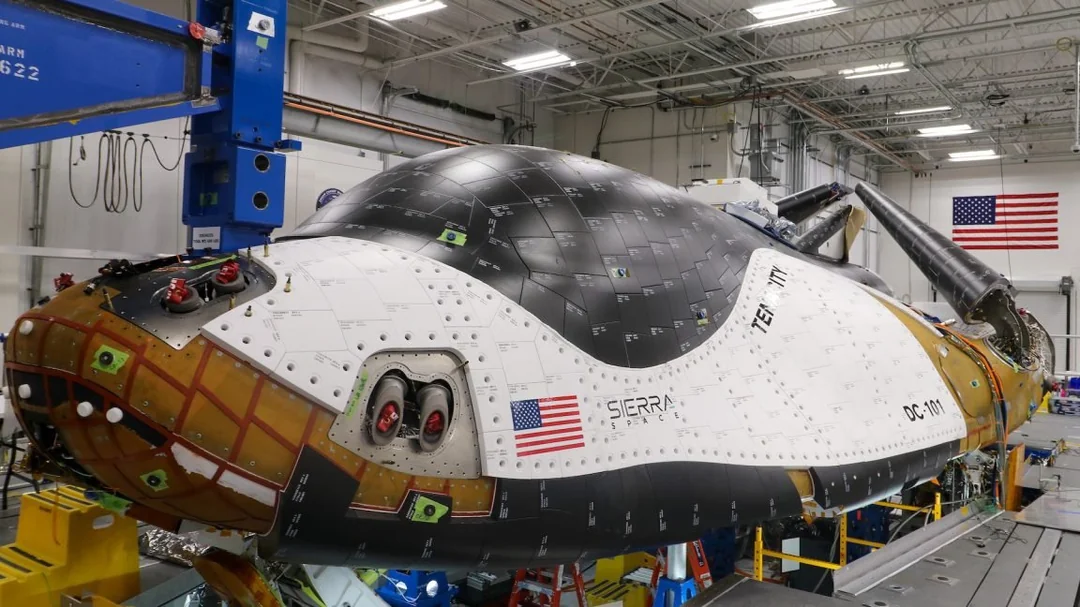
It’s been quite a while since we heard anything about Dream Chaser and specifically Tenacity, the first test article set to launch and berth to the International Space Station. What at one point looked like a vehicle not far from being integrated on top of a Vulcan rocket, has since gone off the radar with very few updates from the company and NASA.
Earlier this month, however, we got some insight from the program manager of the ISS. Comments suggest the vehicle is still undergoing testing, in addition to possible delays related to its propulsion system.
Still Undergoing Testing
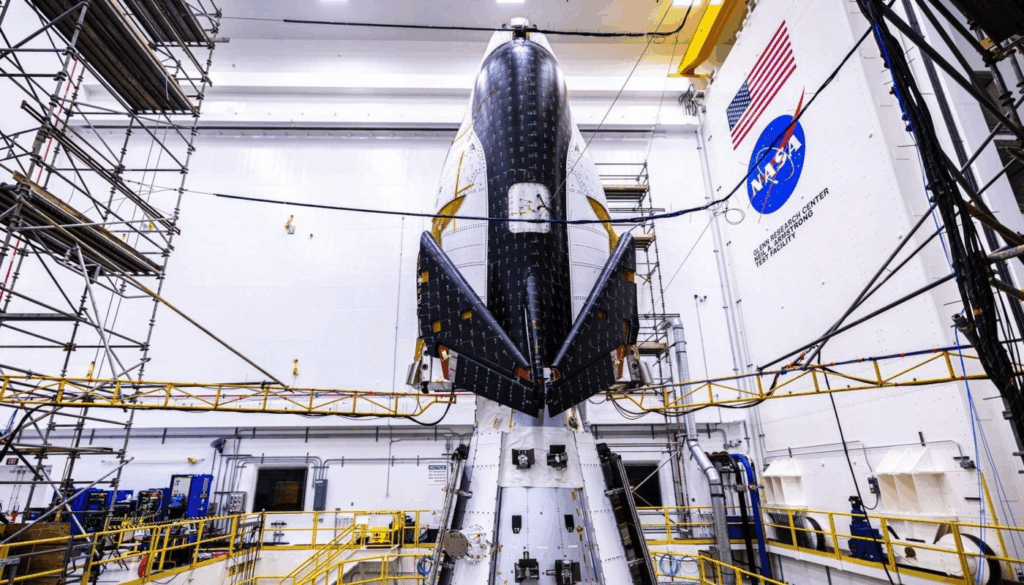
During the SpaceX Crew-11 post-launch news conference held on August 1st, a question was asked to the panel regarding Dream Chaser and what its current status was. Dana Weigel, the program manager for the International Space Station, was quoted saying, “They’re in final assembly, they’re doing a lot of tests, and they’re doing what I call final certification work. Some of the big key areas that they’re working on is the software certification. They have to test end-to-end all the different software functions, so that’s a big focus area for them. And then they’re still working on certification in the prop system” she said.
Based on these comments, it seems that some of the major vehicle tests have been completed, but there are a few areas holding them back, specifically software and propulsion.
With the Shooting Star module, Dream Chaser features 26 RCS thrusters. This includes 8 on the front of the vehicle, 6 on either side of the back, and 6 on Shooting Star. All of which feature three different thrust modes for control. Each thruster is capable of thrust levels at 42, 65, and 113 lbf. At low thrust levels, it operates in a monopropellant mode using catalyzed high-test peroxide (HTP), thus eliminating the need for a separate ignition source. For high thrust maneuvers, the thruster operates in a bi-propellant high-specific impulse mode by also injecting kerosene into the combustion chamber.
The end goal is for this thruster to be robust enough to survive the harsh environments of many launches, in-space, and return to Earth operations without maintenance. They also wanted to use green propellants so they could walk up to the vehicle after landing without hazmat suits. In the meantime, it’s taking more time than initially thought to test and confirm that this propulsion system is capable and ready.
Focusing back on the news conference, Dana Weigel finished by saying, “We still have some of our integrated safety reviews to do, and we’re in the process with updating both of our schedules to try to understand where does that really put us. And so Sierra’s working on that, and so I need to wait and just get information back from them to see where they think some of that work lines out” she said.
It’s clear that there still is a decent amount of work left both on Sierra Space’s side and even NASA’s side as they wait to begin certain safety reviews. As far as a specific launch date, even with these comments, we don’t have a great idea of when the vehicle could be on the pad.
For reference, Dream Chaser has been under development for more than two decades now. One of the last significant updates provided came over a year ago in May 2024, when Dream Chaser Tenacity was delivered to one of NASA’s facilities in Florida for testing.
At the time, they were quoted saying, “The remaining pre-flight activities at Kennedy include acoustic and electromagnetic interference and compatibility testing, completion of work on the spaceplane’s thermal protection system, and final payload integration.” Around this time, they were also still aiming for a launch late that year in 2024. As we now approach the end of 2025, it seems unlikely the vehicle will lift off until 2026.
If all that wasn’t enough, assuming in the future Tenacity is ready to launch, the availability of a launch vehicle might add even more delays. The plan has been and still is to use United Launch Alliance’s Vulcan rocket for not only the maiden flight but following missions as well. That being said, Vulcan has experienced a number of delays and just completed its first National Security launch. With that comes a busier schedule and a full manifest, possibly impacting a launch date with Dream Chaser.
Dream Chaser Spaceplane
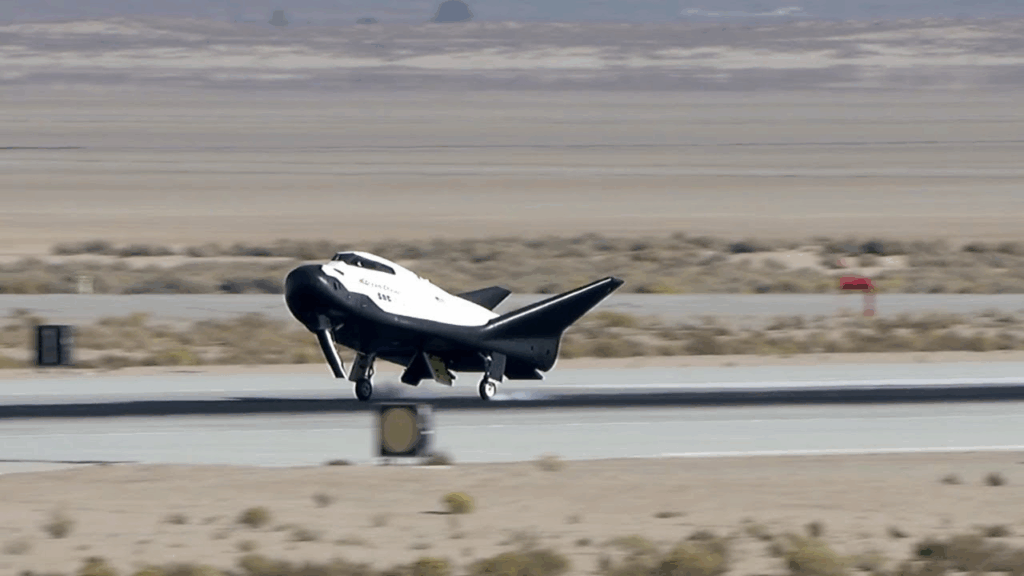
While delays aren’t ideal, the Dream Chaser spaceplane is a very unique vehicle with lofty goals for the future. Dream Chaser is a lifting body design spaceplane that measures 30 feet (9.1m) long by 15 feet (4.6m) wide. The winged design allows it to transport cargo to and from low Earth orbit and maintain the ability to land on a runway in the style of NASA’s space shuttle. The Shooting Star module at the end can carry up to 7,000 pounds (3200kg) of cargo internally and features three unpressurized external payload mounts.
The original plan was for the partially reusable transportation system to perform at least seven cargo missions to the space station as part of the agency’s efforts to expand commercial resupply services in low Earth orbit. They noted that future missions may last as long as 75 days and deliver significant amounts of cargo.
As part of the process to certify the vehicle system for future agency resupply missions, NASA and Sierra Space want to put the spaceplane through its paces once in-orbit. As Dream Chaser Tenacity approaches the space station, it will conduct a series of demonstrations to prove attitude control, translational maneuvers, and abort capabilities. After completing the maneuverability demonstration, space station astronauts will use the Canadarm2 robotic arm to grapple the spacecraft and dock it to an Earth-facing port.
After remaining at the orbiting laboratory for about 45 days, the spaceplane will be released from the station and return for a landing at Kennedy’s Launch and Landing Facility. After landing, Dream Chaser is powered down, and the Sierra Space team will transfer it back to the processing facility to perform necessary inspections, offload remaining NASA cargo, and begin the process of preparing it for its next mission.
That plan, however, could very well change depending on a few things. For one, the ISS is set to retire by the end of the decade. While still 5 years away, as delays continue, the opportunity for all these missions and demonstrations is closing.
Focusing on the vehicle, there are a few areas that teams have been spending the most time on. The heat shield is a good example of a focus point for the company. Last year, they announced work on a new heat shield technology. In a statement, the company was quoted saying, “The breakthrough development enables exterior spacecraft tiles that can withstand the high temperatures of re-entering Earth’s atmosphere over multiple, frequent missions. This new Thermal Protection System (TPS) was created to meet the needs of a commercial space industry that is moving at a faster pace than previous generations of spaceflight, and now requires more missions over shorter periods of time.
They go on to highlight that “The team at Sierra Space and Oak Ridge National Laboratory leveraged more than three decades of experience with NASA’s Space Shuttle program to design the new system.”
In the past, exterior tiles used on the Space Shuttle were only needed for an average of five missions per year. The Shuttle also had a number of complications related to its heat shield. Since the start of work on Dream Chaser, they have expressed certain changes that differentiate the new spaceplane from the Shuttle.
For example, Dream Chaser features around 2,000 tiles in total compared to the more than 20,000 on the Shuttle. Also, Sierra Space is quoted saying, “SNC engineers have been able to update the TPS tiles from what was used during NASA’s shuttle program with more innovation, better technology, and utilizing lessons learned. They use more modern manufacturing techniques to increase strength and reduce cost. Another difference between the tiles is Dream Chaser tiles are about 10 inches by 10 inches, while those on the shuttle were six inches by six inches. Dream Chaser tiles are meant to be stronger and lighter weight than those used during the shuttle program and meet all Micro-Meteroid Orbital Debris (MMOD) requirements.
Keep in mind these comments are talking about the current heat shield system used on Tenacity, not the upgraded variant that the company is working on right now. In a quote from that statement, the Sierra Space CEO said, “Today marks a new era of spaceflight safety technology, and it’s going to enable travel to Low Earth Orbit that will eventually rival the frequency of commercial air travel. Our patent-pending Thermal Protection System is like nothing ever before created and essential to a near future where space travel becomes routine. Reusability of space vehicles is a key factor in expanding the commercial space industry and to do that we need new technology to keep spacecraft and crew safe” he said.
While important, Tenacity is still not ready for flight and won’t be for what could be quite a few more months. Hopefully, the company and NASA can finish testing and begin to prepare the vehicle for its maiden flight.
Conclusion
Thanks to comments from the NASA ISS program manager, we know that Dream Chaser Tenacity is still undergoing testing on both the general software and the propulsion system. What was once scheduled for late last year and much earlier, now likely won’t launch until 2026 at the earliest.