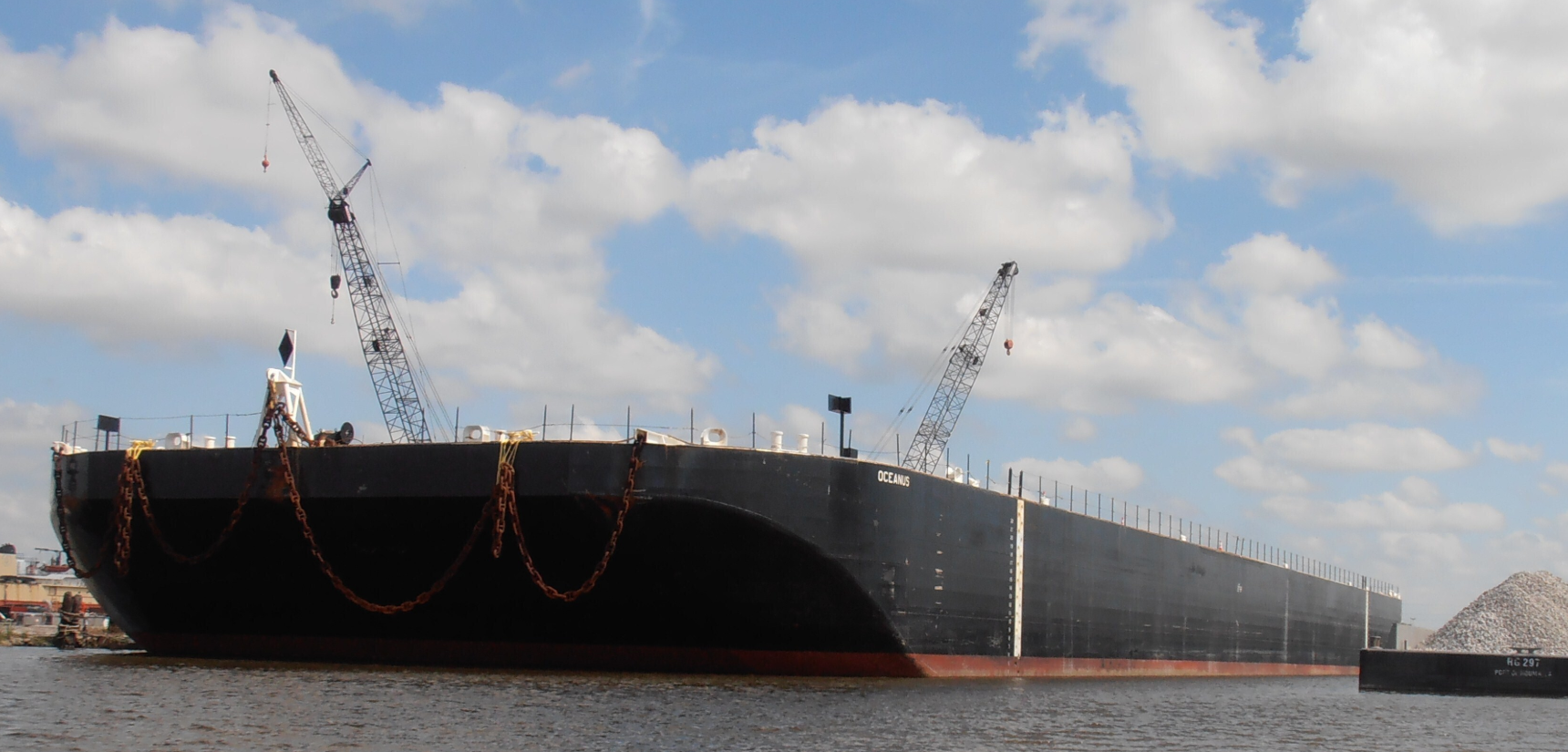
With Rocket Lab still aiming for a maiden flight of Neutron late this year, the company is moving fast trying to prepare not only the vehicle, but the different infrastructure that supports it. A few days ago, on the 10th, the company announced details regarding the contractor working on Neutron’s landing vessel.
This ship was revealed early in the year and since then has been undergoing different upgrades and alterations so that in the future, it can act as a landing pad for Neutron’s booster downrange in the ocean.
Return On Investment
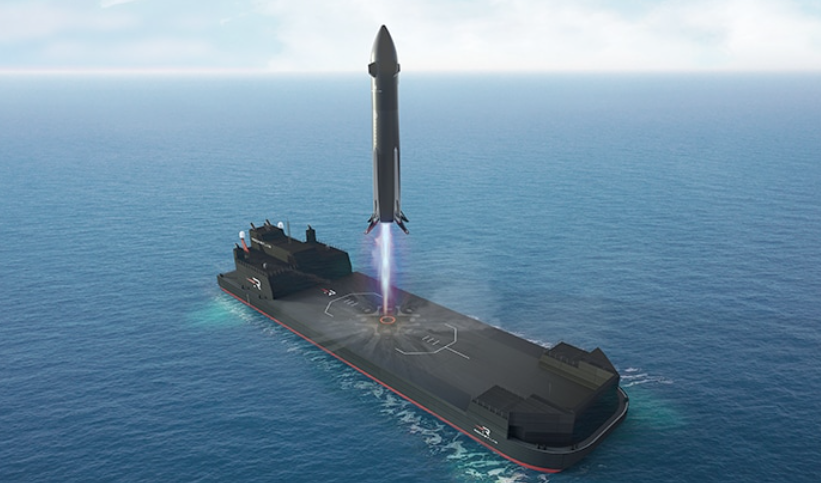
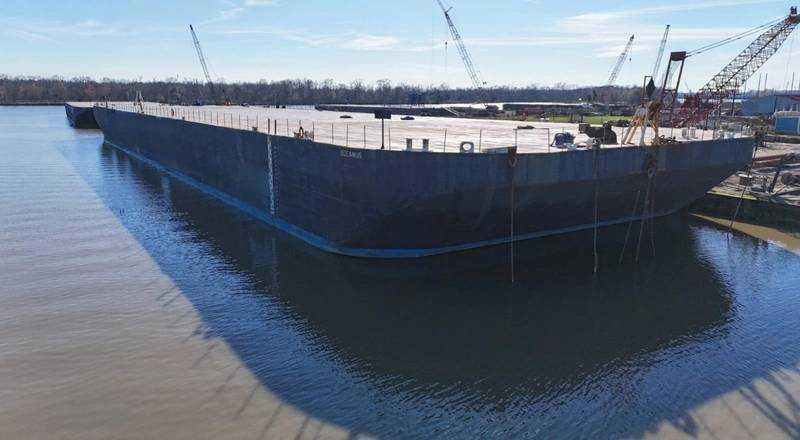
Back in February of this year, Rocket Lab shared some of the first images and information on its newly acquired ship. In reality, it’s a massive barge that’s 400 ft (122 m) long and named Return On Investment. The barge was originally supplied by Canal Barge Inc., a New Orleans-based, private marine transportation company.
In some of the initial images shared by the company, you can see that the deck is completely empty, with no buildings, structures, or even equipment visible. This is where the alterations and upgrades come in. A few days ago, Rocket Lab announced that it awarded a contract to Bollinger Shipyards, the largest privately owned new construction and repair shipbuilder in the United States, to support the build out of Rocket Lab’s ocean landing platform.
The work is being done primarily at the company’s shipyard in Amelia, Louisiana, with Rocket Lab noting that delivery of the vessel is expected in early 2026. This would be quite a fast turnaround given some of the work they plan to complete.
Looking at renders from Rocket Lab of the complete landing vessel, you can see a host of upgrades, mainly including different surface structures and additions helping with the landing and transport process. More specifically, in a statement, the company said, “Modifications will include autonomous ground support equipment to capture and secure the landed Neutron, blast shielding to protect equipment during Neutron landings, and station-keeping thrusters for precise positioning” they said.
For context, Bollinger Shipyards has quite a long history related not only to your typical ship but also to rocket-specific vessels. The company is currently working with United Launch Alliance on a second rocket transport vessel. It’s also thought that this same company has worked on Drone Ships for SpaceX in the past. All of which is a good sign and supports an on time completion and delivery early next year.
In the future, Rocket Lab expects to quickly scale Neutron and double its launch capacity annually once it enters service. In order to do this successfully, they need to be landing boosters and bringing them back for refurbishment, which is where the landing vessel comes in. Once complete, the ship will be operated out of the U.S. East Coast to support the timely delivery and return of Neutron rockets to its launch site on Wallops Island, Virginia.
For reference, Neutron is expected to be capable of two main flight profiles. One of which the booster returns to the launch site for a landing on the ground and another with a downrange landing on the Return On Investment vessel. The downrange landing is intended to maximize Neutron’s performance by requiring less fuel reserves than if it were to return to Launch Complex 3.
During the recent announcement, the Rocket Lab Vice President was quoted saying, “Neutron’s ability to return to Earth on “Return On Investment” and launch again and again will be foundational to its success. With Bollinger’s extensive experience in marine engineering and shipbuilding, they have been selected to deliver this critical project. We’re looking forward to working with Bollinger to create the conditions to modernize Louisiana’s shipyard capabilities to meet the demands of the aerospace industry’s cutting-edge capabilities.”
In addition, the Bollinger Shipyards President and CEO, commented, “Bollinger is proud to partner with Rocket Lab on a project that showcases both the ingenuity and innovation of American shipbuilding and the future of space flight. At Bollinger, we’ve spent decades building some of the most advanced vessels in the world. We’re honored to have been selected to bring our deep expertise and experience in marine engineering and fabrication to a program that pushes the boundaries of what’s possible” he said.
Based on the history and experience of this company, it seems that the timeline of a complete ship being delivered early next year is well within reach. It’s also a good sign that since early this year, in February, the company had the same delivery date and expectations. In other words, they originally planned to have it ready by early 2026, and about 5 months later, in the most recent update, they reiterated the same timeline. Over the next few months, we should hear more about its progress and not long from now, see it make the journey to the Neutron launch site.
Neutron’s Progress
Besides the Neutron landing vessel, Rocket Lab has been busy working on the rocket itself, along with other necessary infrastructure. A few months ago, they released different videos showcasing testing and qualification of the top section of Stage 1. This included opening the fairings and moving the canard, which will help control the stage during reentry and eventually its landing.
Since then, Rocket Lab hasn’t shown much more, but they’re working behind the scenes. Looking at the path to liftoff provided by the company, there are still 5 main objectives marked as in progress. The first is the flight mechanisms test, which includes separation systems, fairing actuation, control surfaces and actuators. The other four are engine qualification, Stage 1 qualification, Launch Complex 3 construction, and regulatory approval for launch.
While each of those steps is important, the one we should be hearing about in the very near future is the completion of Neutron’s launch site. By now, with key pieces of launch site infrastructure installed like the water tower, propellant storage, launch mount, etc, the site is just about done.
To put it in perspective, months ago in early May, the CEO of Rocket Lab, Peter Beck, tweeted saying, “LC-3 pad activation underway and launch site opening soon. This was accompanied by a video showcasing a water deluge test on the launch pad. In the time since then, some of the final propellant tanks and general site construction should have been completed. With this, not long from now, we should get an update from the company confirming LC-3 is ready for Neutron.
That’s especially important because before Neutron launches, it will need to complete a host of tests at the pad. This won’t only include a wet dress rehearsal and static fire, but also a bunch of different small items that come with integrating a brand new rocket on a new launch pad for the first time. Assuming this pad is complete soon, that will give the company the necessary headroom to prepare for the maiden flight of Neutron.
Currently, Rocket Lab is still targeting a maiden flight late this year. While possible, it’s much more likely it gets pushed back to early to mid-2026. This just has to do with the fact that creating a brand new launch vehicle practically always comes with various delays related to the vehicle or its infrastructure.
Neutron is also quite a unique launch vehicle. The design of Neutron includes carbon composite for all of the rocket’s major structures and an upper stage meant to enable high-performance for complex satellite deployments, including the deployment of satellite mega-constellations.
In a statement, the company said, “The Neutron launch vehicle is a reusable launch vehicle leveraging the technology and infrastructure pioneered by the Electron launch vehicle, which has launched 63 times to date and provides the US government and commercial customers frequent, affordable access to space.”
For context, Neutron utilizes a design that brings the Stage 1 and payload fairings back to Earth as a single, integrated stage. This is hoping to maximize cadence in a 13-ton to orbit reusable performance capability. It’s powered by nine Archimedes engines on Stage 1, and one vacuum-optimized Archimedes engine on Stage 2.
Focusing back on dates, with Neutron hoping to launch late this year, and the landing vessel not ready until 2026 at the earliest, this creates a mismatch. In reality, the initial launches of Neutron won’t be attempting to land and be recovered. Instead, we will likely see a soft water splashdown of the booster in the ocean. In theory, once the booster has proved it is accurate and can slow down, we will start seeing actual booster landing attempts downrange.
With all this in mind, the program and general progress seem to be at a good pace. The contracts and future launch opportunities are also coming in consistently. A few months ago in May, Rocket Lab announced it would launch its new medium-lift reusable rocket Neutron for the U.S. Air Force Research Laboratory (AFRL) for a Rocket Cargo mission that supports point-to-point cargo transportation, establishing a new era of commercial launch capability to advance global defense logistics for the nation. The mission is scheduled for a return-to-Earth Neutron launch no earlier than 2026.
Specifically, “The launch contract will see Neutron execute a Rocket Cargo survivability experiment under the AFRL Rocket Experimentation for Global Agile Logistics (REGAL) solicitation, an effort by the Department of Defense to create a rocket-based point-to-point transportation system to quickly and rapidly deliver cargo around the world with commercial launch providers.”
In regard to this contract, Peter Beck was quoted saying, “Neutron is a powerful new launch option that will set a new standard for performance, affordability, and reliability for government and commercial space users in medium launch. This opportunity for the U.S. Air Force not only helps to advance space logistics, it also demonstrates a high degree of confidence by the DOD in Neutron’s capabilities. Anticipation is high for Neutron’s inaugural flight this year, and we’re excited to showcase Neutron as a platform for R&D for point-to-point logistics for the DoD.”
Conclusion
Rocket Lab is moving fast with its new Neutron landing barge set to be complete by early next year. At the same time, work is progressing on not only the vehicle but also the launch pad, which should be completed in the near future.