Rocket Lab is currently working on a new partially reusable medium lift launch vehicle named Neutron, with the goal of launching it for the first time late this year. While its launch site, physical stages, and design are important, arguably the most time-consuming and crucial aspect has to do with the engines.
The company has been working to design, manufacture, and now test a new engine named Archimedes specifically for the Neutron rocket. Recently, we got more information on how this has scaled and the current production and test schedule underway. Here I will go more in-depth into the engine testing, up in production, and more.
Increased Testing

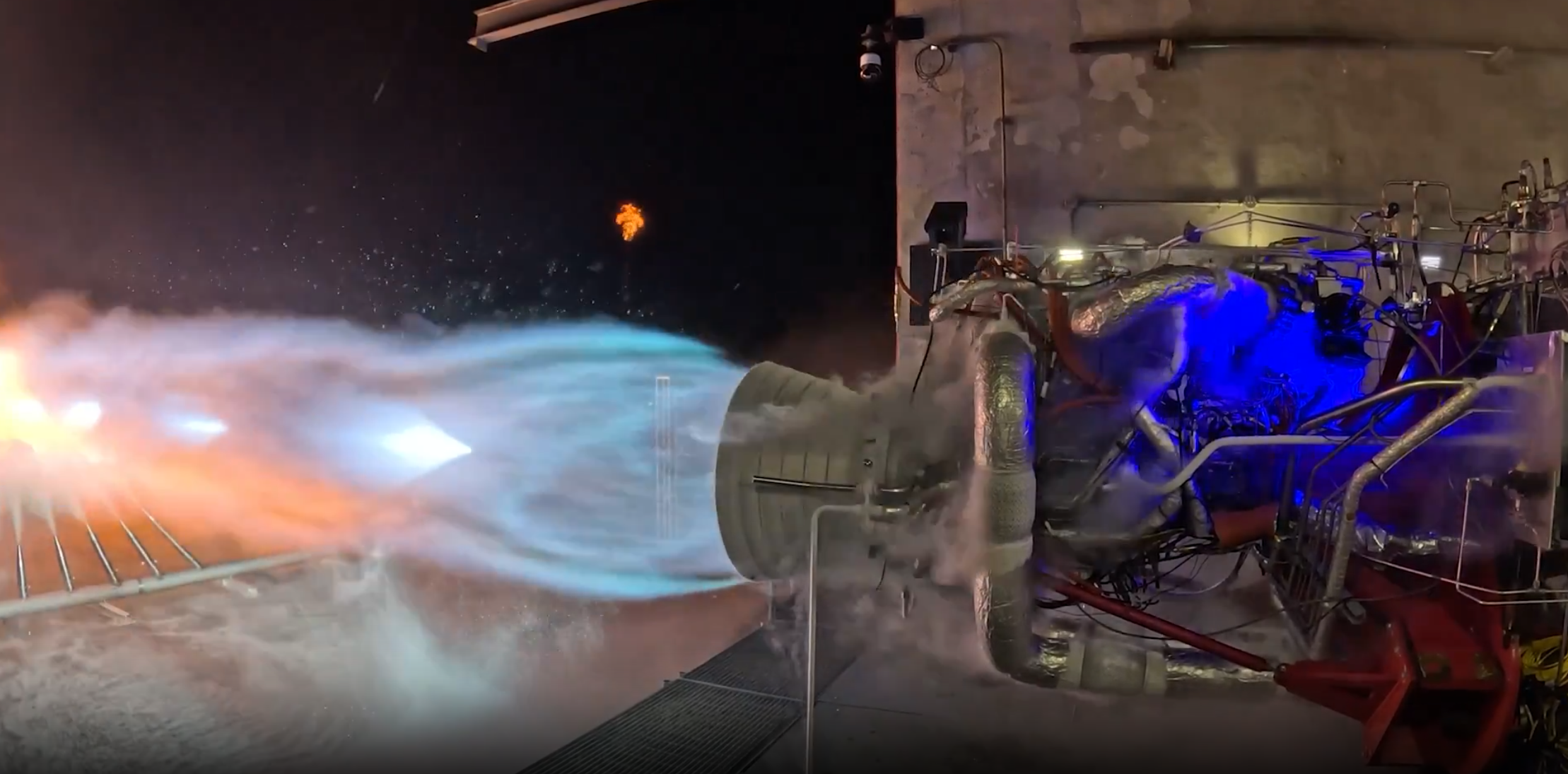
Earlier this month, Rocket Lab released a video of a full Archimedes mission duration hot fire. In other words, it was firing for as long as it would in an actual launch, had it been installed on the bottom of Neutron’s first stage. The test lasted just over 2:30 minutes and is a good sign for the engine program.
For context, Rocket Lab completed the first full assembly of an Archimedes engine back in May of last year. A few months later, in August 2024, they hot-fired Archimedes for the first time, reaching a critical technical milestone. In the time since then, both testing and assembly of engines have ramped up significantly.
During the recent financial update from the company, CEO Peter Beck was quoted saying, “Engine testing is accelerating, and this is the most crucial and time-consuming aspect of any rocket development program, and always the longest pole in the tent.”
“We’re running the engine to full mission duration, and the operation test cadence is heading up to 3 or 4 hot fires a day now, 7 days a week, as we work diligently through all the engine qualification program” he said. This is significant and highlights the emphasis Rocket Lab is putting on these new engines.
As far as what warrants this much testing besides general engine development, Peter Beck went on to say, “In between hot fires, the teams are making improvements and iterating on the design quickly, and then getting right back into the next engine test fire and on the stand. We expect these tweaks all the way up to Neutron’s debut launch and beyond.”
With this, it’s clear the Archimedes engine will be a continued focus and project for the company well into operational Neutron launches. The goal is to keep gathering data and fine-tuning the engine. If successful, this can both simplify it, improving reliability and even production time, but also make it more powerful or efficient, helping Neutron’s payload capabilities.
Besides testing, looking at the actual manufacturing side of things, it’s a similar story. Again, earlier this month, Beck was quoted saying, “The Archimedes engine manufacturing line is now capable of knocking out a new engine every 11 days, and we believe we’ve scaled our operations to be ready to move into multiple flights a year after the first launch gets off the ground.”
When Neutron was first announced, the plan was to use 7 Archimedes engines on the first stage. Not long after, however, that was changed to 9, with a single engine powering the second stage. Those 9 engines combined will provide Neutron with just under 1,500,000 lbf of liftoff thrust.
In terms of design and propellants, the engine is an oxidizer-rich staged combustion cycle powered by liquid oxygen and methane. Rocket Lab has pointed out that it’s designed for maximum reusability, with an operating point that allows the engine to operate at lower stress levels compared to other rocket engines on the market, and with a minimum reuse target of up to 20 launches per engine. At full power, each Archimedes engine is capable of producing 165,000 lbf (733 kilonewtons). Some critical 3D printed parts that at one point have undergone testing include turbo pump housings, pre-burner and main chamber components, valve housings, and engine structural components.
Interestingly, the engine also changed from a gas generator cycle to oxidizer-rich closed cycle. As the company worked through the content of operations and did all the power balances, they found very high turbine temperatures, not enough margin, and overall the need for a lot of compromises. Specifically, the oxidizer-rich closed cycle provides a higher specific impulse than gas generator, open expander, or tap-off cycles, without the thrust limits or added complexity. Gas generator cycles are limited in capability and not suited to the deep throttling required for multiple re-lights in orbit, and for landing the first stage. ORSC engines operate at relatively low temperatures and pressures, eliminating the stress and thermal strain experienced by gas generator engines. This improves engine life and reusability, while leaving headroom to increase performance.
Looking at Neutron’s path to lift off, one of the few items left in progress is engine qualification. Despite the constant upgrades and testing, Peter Beck and Rocket Lab have made it clear that they don’t want to rush this process. In reality, the success of an engine can make or break a rocket program, something Rocket Lab is aware of.
Testing Infrastructure
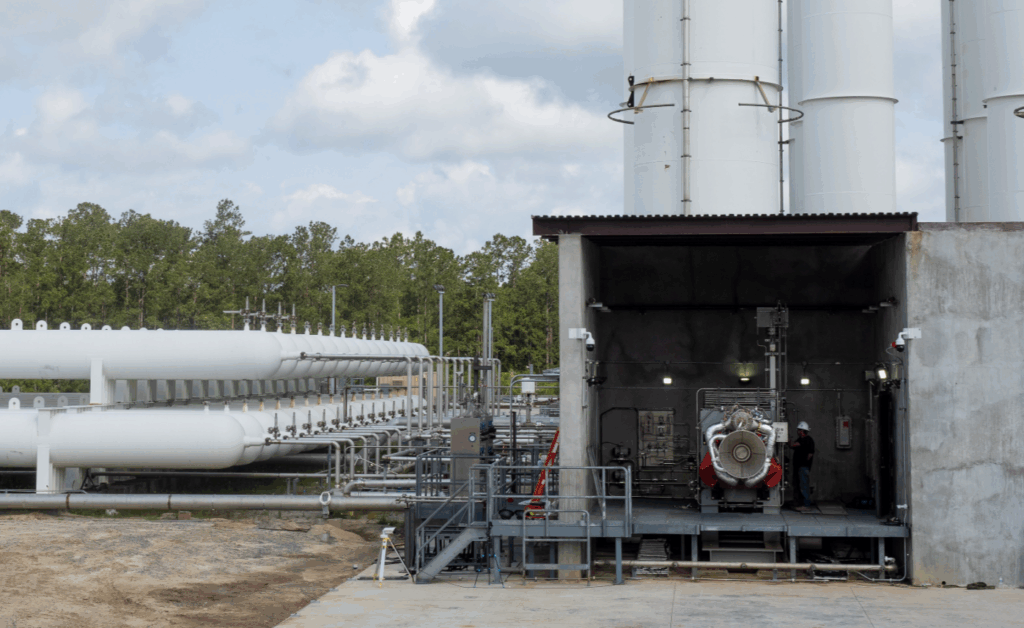
Again, looking at the recent hot fire video provided by the company, the location where this test and all the others are taking place is in Mississippi. Starting in September 2022, Rocket Lab selected NASA’s Stennis Space Center as the location of its engine test facility. Just weeks later, NASA’s Stennis Space Center and Rocket Lab cut the ribbon on a new agreement for the aerospace company to locate its engine test complex. Since then, we have seen a lot of work on the site.
Part of the agreement, the A-3 Test Stand and about 24 surrounding acres at Stennis was incorporated into the Archimedes Test Complex. The initial 10-year agreement includes an option to extend an additional 10 years.
Focusing on the importance of this facility related to Neutron, the Archimedes Test Complex is located within the larger A Test Complex at Stennis Space Center across a 1 million square foot area. The Archimedes Test Complex includes exclusive use and development of existing industrial NASA infrastructure and the Center’s A-3 Test Stand. Originally, Rocket Lab also secured a capital investment incentive from the Mississippi Development Authority to further develop the facilities and infrastructure at Stennis for Neutron.
By now, the site features two horizontal engine test cells for single-engine testing. Interestingly, Rocket Lab was adamant about bringing a mature design even to the first physical test. Around the time an Archimedes engine was first put on the test stand Peter Beck commented, “Often with engine development plans there can be a rush to get a minimum viable product to the stand, after which you have to spend years in redesign and iterative testing to get the performance you need, let alone being able to reproduce it reliably on a large production scale. What we’ve taken to the test stand is very close to a flight-like engine, and with all of our production infrastructure stood up alongside the engine’s development, we’re in a prime position to be able to make quick iterations to Archimedes for a rapid development and qualification campaign” he said.
Besides the engines, a lot of other work has been underway. Launch Complex 3, for example, which is for Neutron missions, is set to open this month, with the official ribbon cutting scheduled for August 28th. Launch pad activation is underway, and final construction activities are being closed out. Peter Beck mentioned, “The water deluge system was activated last quarter, and now the team is meticulously making their way through system by system to prepare for static fire operations on the launch mount once flight hardware arrives. Launch Complex 3 is set to be a hugely important national asset. There’s a spaceport bottleneck at the other federal sites, which shows how important launch site diversity really is” he said.
By now, with key pieces of launch site infrastructure installed like the water tower, propellant storage, launch mount, etc, the site is just about done. Once it’s opened later this month, the next time it will be used will be with actual flight hardware, preparing for a launch.
Its early completion is especially important because before Neutron launches, as highlighted, it will need to complete a host of tests at the pad. This won’t only include a wet dress rehearsal and static fire, but also a bunch of different small items that come with integrating a brand-new rocket on a new launch pad for the first time. With the pad basically done, it should give the company the necessary headroom to prepare for the maiden flight of Neutron.
Even still, the company is continuing to aim for a launch this year. In a recent statement, Peter Beck commented, “All in all, we continue to push extremely hard for an end-of-year launch. We continue to run a greenlight schedule with Neutron, which means every single thing needs to go to plan for the schedule to hold. But I also want to stress that we’re not going to rush and take stupid risks to launch Neutron before it’s ready. In the context of the life cycle of the vehicle and the program, a couple of months here or there is completely irrelevant. What’s really important is performance, reliability, scalability, right from the get-go. There will be no cutting corners here to just rush to the pad for a deadline.”
These comments highlight how tight the schedule is. In order for a launch to happen this year, all of the remaining pre-launch activities will need to go very smoothly, which is somewhat rare for a new next-generation launch vehicle. Again, looking at the path to liftoff, besides engine qualification, the other items still in progress include the flight mechanisms test program, stage 1 qualification, regulatory approval, vertical integration, and the stage 2 static fire. The only two other items are a stage 1 static fire and a full rocket wet dress rehearsal. Something we’ll have to keep an eye on over the next few months.
Conclusion
The Archimedes engine, which will power Rocket Lab’s Neutron vehicle, is making fast progress, with testing ramping up to 3-4 tests per day. This, combined with improved production times and general progress, supports a maiden flight and the creation of even more Neutron rockets in the future.