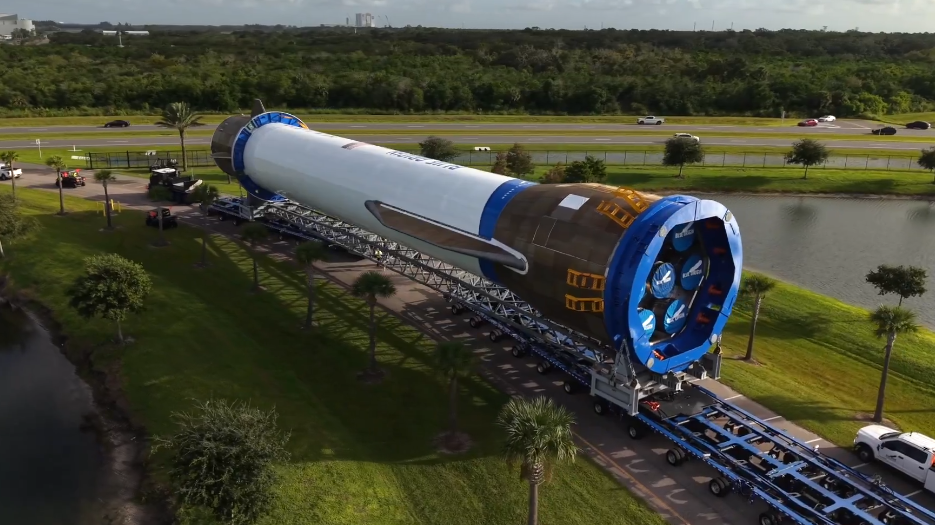
In just a few days from now, we can expect to see the second New Glenn rocket lift off with payloads heading to Mars and a booster landing attempt. In the last week, the booster was static-fired successfully before being rolled back to the facility. The two payloads were then integrated the next day, and at this point, the rocket is just about ready.
The company confirmed a launch opportunity as soon as Sunday, assuming no additional delays related to weather, sea state, etc. Here I will go more in-depth into the launch date, payload encapsulation, flight profile, and more.
Launch Date
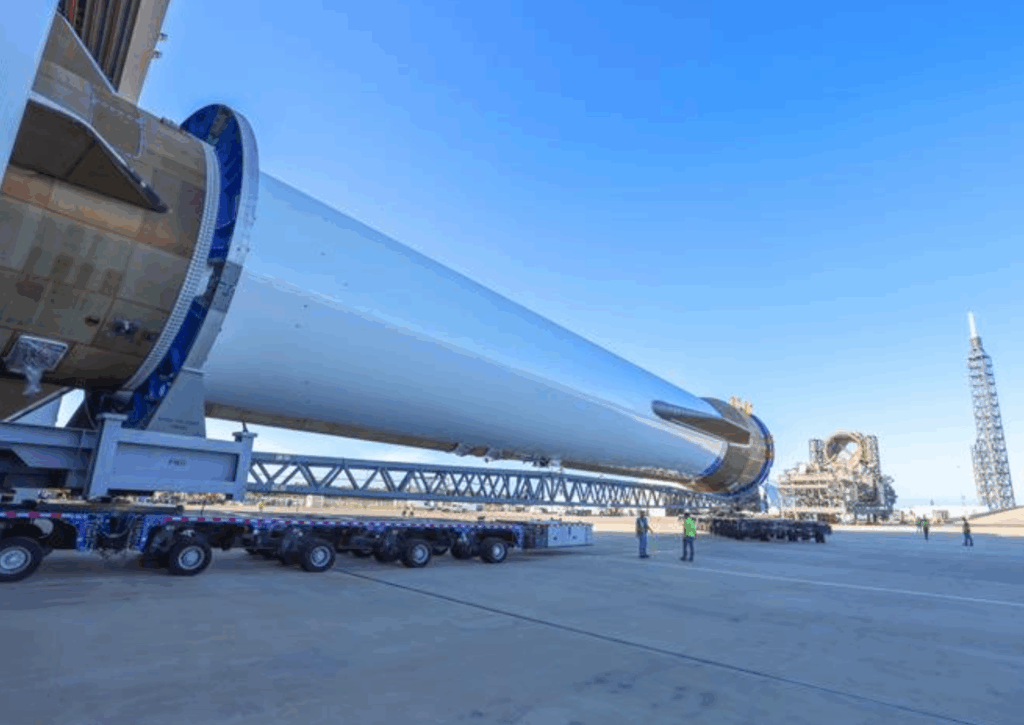
Yesterday, Blue Origin tweeted, “Launch Alert | We’re targeting New Glenn’s second launch no earlier than Sunday, November 9, from LC-36. NG-2 will send NASA’s ESCAPADE twin spacecraft on their journey to Mars and carry a Viasat technology demonstration for NASASpaceOps’ Communications Services Project.
Looking at a Plan Advisory from the FAA, it shows the primary and backup dates for New Glenn’s second launch. Currently, it states that the launch window is set to take place on the 9th, starting around 3 pm EST, with a backup opportunity the next day on the 10th. Interestingly, when this advisory was originally updated just a few days ago, it showed a launch opportunity as soon as the 7th. This was then changed to the current dates provided. Either way, it’s clear that Blue Origin and the hardware in particular are ready as soon as any regulations and weather permit.
In terms of possible delays, on the first launch earlier this year, the mission was pushed back multiple times due to sea state conditions downrange. With Blue Origin attempting the second booster landing, they’re likely going to wait for ideal conditions to give the stage the best chance at softly touching down on Landing Platform Vessel 1, or Jacklyn.
On October 29th, the rocket was rolled out to the pad. New Glenn went vertical on the Transporter Erector (TE). During this operation, the load shifts from the horizontal support system to the vertical supports around 74 degrees. Near 89.5 degrees, they pause for a final check, then pin the Transporter Erector in place using clamps on the launch table that mate to the aft launch ring.
From here, they performed various checkouts leading up to the static fire. The next day, on the 30th, they ignited the engines for a 38-second fire. They confirmed that all seven engines performed nominally, including all seven engines operating at 100% thrust for 22 seconds.
Blue Origin’s CEO Dave Limp was quoted saying, “We extended the hotfire duration this time to simulate the landing burn sequence by shutting down the non-gimballed engines after ramping down to 50 percent thrust, then shutting down the outboard gimballed engines while ramping the center engine to 80 percent thrust. This helps us understand fluid interactions between active and inactive engine feedlines during landing” he said.
For comparison, leading up to the first launch of New Glenn, the static fire lasted just 24 seconds and was the first time Blue Origin operated the entire flight vehicle as an integrated system. On that flight, the booster was lost during engine ignition apart of the reentry burn. It seems like this time around, they are putting a lot of extra focus on the engines and that mission milestone.
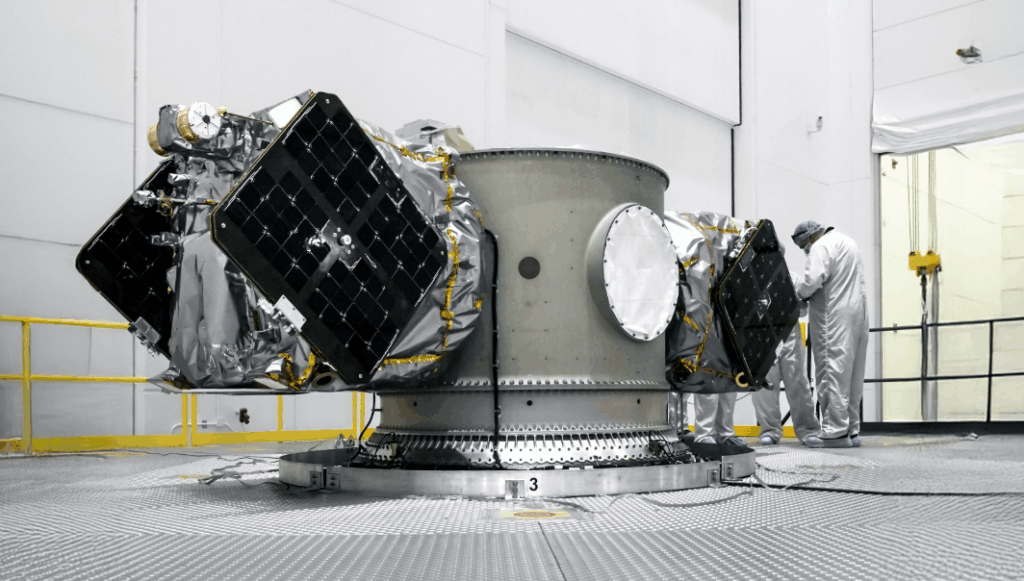
After the static fire, teams were encapsulating the payloads the next day. On the 31st, Rocket Lab shared an image of the two ESCAPADE spacecraft connected to the payload adapter. They were quoted saying, “Our two spacecraft for the ESCAPADE mission have been successfully encapsulated into the rocket fairing. This is the last time they’ll be seen on Earth before their mission to Mars.”
We then got confirmation from Blue Origin that the fairings were installed and ready for integration with the rocket itself. It’s worth pointing out that these are the only two payloads aboard, and because of their small size, at least relative to the rocket, you have a massive 7-meter payload fairing that’s mostly empty on the inside. That being said, the trajectory and deployment of these two payloads are pretty unique.
Most recently, Blue Origin confirmed that Jackyln departed last night on the 5th. Soon, it should be arriving at the eventual booster landing location past the Bahamas, where it will wait until the launch.
In relation to the booster landing attempt, Dave Limp mentioned, “NG-1’s goal was clear: reach orbit, everything after that was a bonus. NG-2 builds on that with our primary goal to get Escapade safely to orbit and land the booster. What if we don’t stick the landing? That’s ok. We’ve got several more New Glenn boosters already in production” he said. This time around, the booster is named Never Tell Me The Odds, in reference to the landing attempt. While he mentions how it’s fine if the booster doesn’t stick the landing, it’s definitely what they’re aiming for. Successfully landing and getting access to that booster and the 7 BE-4 engines would be a substantial milestone for the company and the New Glenn program. Something we might see as soon as this Sunday.
The Mission
In a lot of ways, this second launch of New Glenn is a much bigger deal than the first. On the first launch, the payload was the company’s own Blue Ring Pathfinder. This time around, it’s two spacecraft headed for Mars that have been in development for years.
ESCAPADE is a NASA mission, but the two spacecraft were built by Rocket Lab. It stands for Escape and Plasma Acceleration and Dynamics Explorers. Assuming the launch goes to plan, it will take the two spacecraft around 11 months before they arrive at Mars.
Once there, the twin orbiters will take simultaneous observations from different locations around Mars. The observations are hoping to reveal the planet’s real-time response to space weather and how the Martian magnetosphere changes over time.
Specifically, ESCAPADE will analyze how Mars’ magnetic field guides particle flows around the planet, how energy and momentum are transported from the solar wind through the magnetosphere, and what processes control the flow of energy and matter into and out of the Martian atmosphere. They want to see how the solar wind strips atmosphere away from Mars. So much so that Mars no longer supports liquid water on its surface. The pair will be the first multi-spacecraft science mission to Mars.
Both were built and tested at Rocket Lab’s Space Systems facility in Long Beach, CA. Named Blue and Gold, their design was based on Rocket Lab’s Explorer spacecraft, a configurable, high delta-V interplanetary platform.
In a statement, the company says, “The spacecraft are vertically integrated using Rocket Lab’s reliable, flight-proven satellite subsystems and components such as: Solar panels, star trackers, propulsion tanks, reaction wheels,” and many more.
Besides payload deployment, the other main highlight of the mission is the booster landing. Not only the landing, but the process to secure and safe the booster if it manages to land successfully. Using two forward and two aft thrusters, the barge is able to hold its position in the ocean. After landing, Blue Origin will deploy the ROV (Remotely Operated Vehicle), which will connect to the booster and effectively provide power and pump nitrogen into the rocket. This allows the tanking process to continue to make it safe for the booster to operate. Finally, 6 transit stands will secure the booster to the deck. At that point, crew could come aboard and finish the job.
Looking at the flight profile, it starts with New Glenn lifting off from Launch Complex 36. Following separation, the first stage autonomously descends toward Jacklyn. Meanwhile, the two BE-3U engines ignite, propelling New Glenn’s second stage into space. The fairing separates and the twin ESCAPADE spacecraft are deployed to begin their journey to Mars. After completion of the mission profile, the second stage will be safed and inerted.
After flight 1, the FAA completed its mishap investigation following the loss of the booster. They were quoted saying, “The FAA oversaw and accepted the findings of the Blue Origin-led investigation. The final mishap report identified the proximate cause of the mishap as an inability of New Glenn’s first stage to restart the engines, preventing a reentry burn from occurring, and resulting in the loss of the stage. Blue Origin identified seven corrective actions to prevent reoccurrence of the event. The FAA will verify that Blue Origin implements corrective actions prior to the launch of the New Glenn-2 mission” they said.
Blue Origin was a bit more specific, commenting, “Our ambitious attempt to land the booster, “So You’re Telling Me There’s a Chance,” was unsuccessful due to our three BE-4 engines not re-igniting properly. On New Glenn, three of the seven engines gimbal to provide the control authority during ascent, re-entry, and landing on Jacklyn, the recovery vessel located downrange at sea. That gimbal capability, along with the landing gear and Reaction Control System thrusters, are key to making the booster fully reusable. With the data gained from flight 1, and changes in place, we could see a landing in just a few days.
Earlier this year, Blue Origin won a contract to serve as a National Security Space Launch (NSSL) Phase 3 Lane 2 heavy-lift provider. This contract tasks New Glenn with missions to stressing orbits requiring higher performance launch systems and full mission assurance as a Space Systems Command certified launch vehicle. It’s the third national security launch-related contract they’ve been awarded in the past year. The company is eager to begin increasing New Glenn’s launch cadence.
Conclusion
New Glenn’s second launch is officially set no earlier than November 9th. In the past week, we’ve seen the booster static fire, payload integration, and most recently, Jacklyn heading to its position downrange. At this point, the only thing left is to launch and send two payloads to Mars.