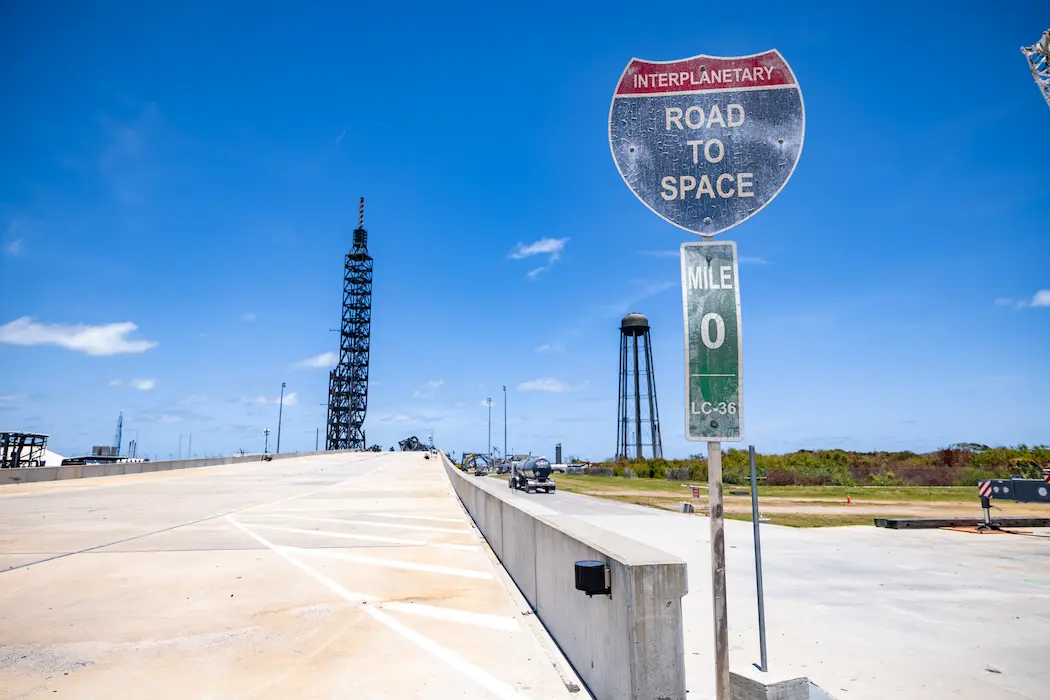
In the time since the loss of NG-4, teams have been working 24/7 to clear debris and start on major repairs. Blue Origin continues to highlight its intent of launching again this year, which would be an incredibly fast turnaround given the damage the pad sustained.
Earlier today, the company released an official 5-phase plan to return to flight. This includes some major changes to the pad’s design and how New Glenn integrates with it. Here I will go more in-depth into Blue Origin’s progress, pad cleanup, the new design, and more.
Cleaning Debris
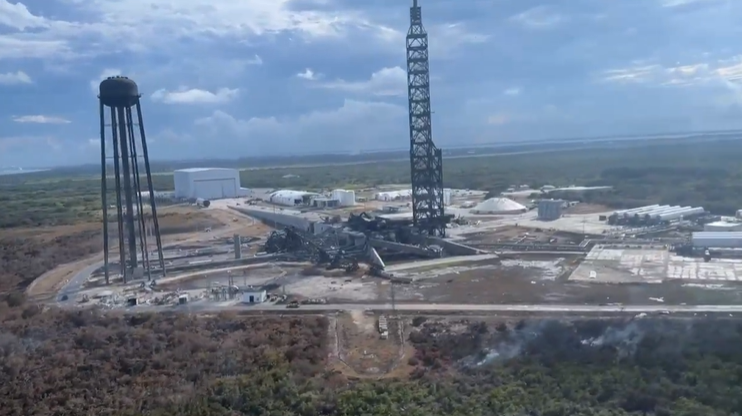
Immediately after the loss of the vehicle, teams began working trying to get an idea of how bad the damage was. This included helicopter flyovers, one of which had NASA Administrator Jared Isaacman aboard.
Blue Origin was able to regain partial access to the pad just two days after the vehicle explosion. At the time, they noted that they would start clearing the pad soon and would have a good rebuild plan in place. CEO Dave Limp was quoted saying, “Now that we’ve had access to the pad and integration facility we can share a bit of good news. The propellant farm, oxygen, liquid hydrogen and LNG tanks are all in good shape. This is good luck because these are very long lead items. The water tower is also good. The big support tower is damaged, but it can be repaired in place rather than torn down and replaced” he said.
He also addressed the integration facility and the condition of the vehicles inside. For reference, this building is right next to the pad and had New Glenn flight hardware inside when the vehicle exploded on the pad, specifically, one booster and three upper stages. In video and images from the company, you can see the damage to the doors caused by the shockwave. When the vehicle was lost, it was thought that it might have damaged some of those stages inside the building.
Once they had access inside, they started doing an inspection and commented that “The booster “Never Tell Me The Odds” and the three GS-2s that were onsite in the integration facility also look good.” Over the next week, they moved these stages out of the facility and over to Rocket Park.
We then have all of the debris scattered across the launch pad. In a different image from Blue Origin, we get a good view of what they have to deal with. This mainly includes the lightning tower that collapsed, the remains of the transporter erector, and the large roof that hung over the flame trench.
In timelapses, they start getting rid of what they can. This also includes the various nearby tents and the contents inside. Not long after, they’re able to clear basically all of the transporter erector remains, in addition to the fallen lightning tower.
This leaves just the flame diverter roof and the main tower. While the main tower is still standing, it was damaged thanks to its proximity to the explosion, which means it needed to be worked on. In terms of the plan, a few days ago, Dave Limp was quoted saying, “We will start pulling down the tower (segment by segment) so we can modify each piece in parallel.”
In order to do this, teams assembled a 600ft (183m) tall crane on the pad. With this now set up, over the next few days, we can expect the tower to come down piece by piece so it can be inspected, repaired, and altered as needed.
Earlier this morning, Blue Origin posted a path to flight with five phases and their progress. They have the site secured, marked as complete, in addition to the site recovery and cleanup phase. This means that just about one month after the loss of the vehicle on the pad, most of the debris has been cleared, and they are now ready to start building back up. There are a few exceptions, like the tower damage and flame diverter roof, but it looks like the company is grouping those in the major repair phase. Based on what the company has said, this pad is going to look very different once they’re done with it.
Pad Changes
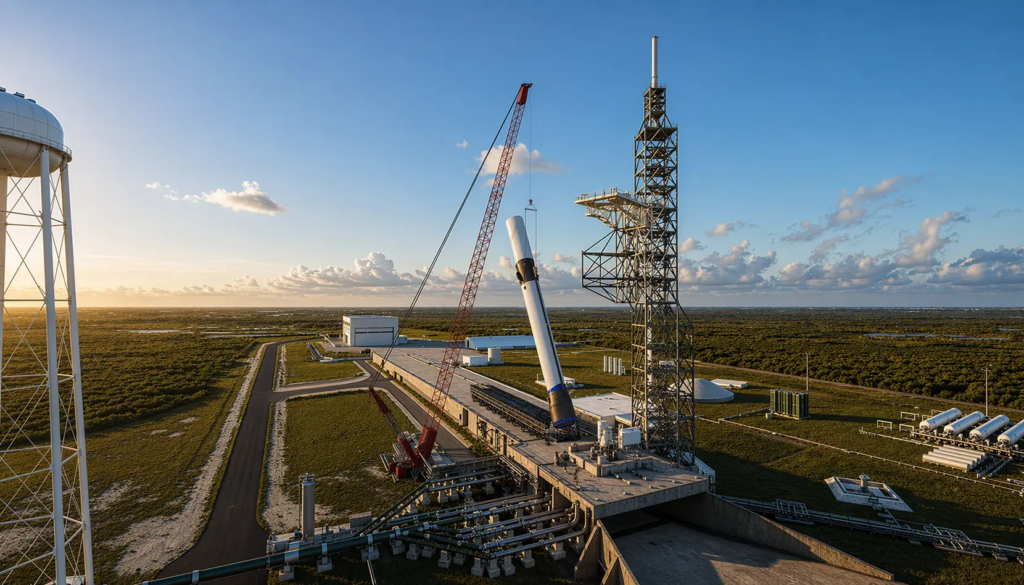
Blue Origin has decided not to rebuild the pad as they had before, but instead to alter it in a way that could accelerate the return to launch and also support future launches of a bigger New Glenn variant. In a statement, the company said, “To return to flight this year, we’re not rebuilding the same pad. We’re going straight to a horizontal/vertical hybrid CONOPS we had already been developing for our 9×4 New Glenn launch vehicle, using existing infrastructure, skipping a new transporter-erector, and creating a common CONOPS across two pads” they said.
In other words, they decided they’re not going to build a new transporter erector. It was revealed that in addition to the main Transporter Erector structure being destroyed, the massive hydraulic cylinders used to push the horizontal vehicle vertically, located inside the pad, were also lost. This no doubt influenced the company’s decision.
Instead, Blue Origin is going to use a crane to not only place the vehicle on the pad but also the payload. They released an animation showing what to expect. They believe this approach leverages existing work while advancing the goal of full interchangeability between launch pads, giving them greater operational flexibility for the future.
It starts with GS1 and GS2 being mated horizontally using existing assets before being lifted onto the transporter for rollout to the pad. From here, a crane performs a vertical breakover of New Glenn—the reverse of the operation already used to offload the booster from Jacklyn—and lifts the vehicle onto a refurbished launch table, where it mates to the launch vehicle hold-down ring. Umbilical connections are made between the main tower and the rocket.
Next, the payload is transported to the pad base and lifted atop New Glenn. Once secured to the launch vehicle, the payload umbilical engages. The crane clears the pad, and the vehicle is ready for launch. In a render of the pad, you get a much better idea of the changes being made. The most obvious is the crane, not far from where the lightning tower had been located, which it looks like they don’t plan on replacing.
You then have an upgraded launch tower. It features a lot more steel for added support and strength, not to mention the mechanism for actually integrating with the rocket, and surrounding the top of it. The other changes have to do with the bottom of the pad over the flame diverter and the hardware used to move the rocket from the integration facility to the pad itself.
What isn’t exactly clear is how long-term a solution the crane is. Some believe that Blue Origin intends to use the crane up until a more permanent option is available, such as the tower itself helping in the stacking process. At the very least, the crane will require quite a bit of maintenance and work to ensure it’s in great shape after each launch and ready to stack the rocket and payload. It also has to either withstand or get out of the way of the rocket’s exhaust.
Dave Limp pointed out that these changes will not only allow them to launch again this year, but they will also help increase their launch cadence. Given the amount of work still left to do, a launch at the pad this year is very ambitious. It also doesn’t solely rely on the pad, but on the results of the anomaly investigation and finding out what caused the loss of the vehicle. In this morning’s update, they only shared a bit of information about the cause. They were quoted saying, “We continue to actively investigate the cause of the anomaly. The vehicle is highly instrumented with extensive data from multiple camera angles and sensors, giving us confidence in our ability to identify and correct the root cause. Early analysis points to the aft section of the first stage” they said. Hopefully, in the coming weeks, they will provide more information on exactly what happened.
Fortunately for the company, they have received a lot of support. In a statement, they said, “The response from our industry partners and customers has been extraordinary. This support reinforces what we already know—what we’re doing matters. From our national security and civil partners protecting our nation and returning humanity to the Moon, to commercial customers expanding global connectivity, reliable access to space has never been more critical. We take our responsibility as a launch provider very seriously, and we are committed to returning to flight with the reliability our mission demands,” they said.
After flying over the pad the NASA Administrator said, “There is a lot of work to do, but this is exactly why people choose careers in aerospace, whether at NASA, Blue Origin, or across the industry. The talent in this field thrives under pressure and performs at its best when solving the toughest problems. We have been saying for months at NASA that we are not going to sit on our hands and wait for the capabilities necessary to achieve the nation’s most pressing objectives. We are going to take an active role alongside our partners, just as we did in the 1960s, to overcome setbacks, remove obstacles, and deliver the intended outcomes. NASA is committed to helping the Blue team recover, continue to advance their lunar lander and get New Glenn back to launching as soon as safely possible” he said.
Conclusion
It’s been just about a month since New Glenn exploded on the launch pad and caused extensive damage. Since then, teams have been working 24/7 to clear debris and work on plans to rebuild the pad. This time, they are making some changes with the hope of being ready sooner and increasing the launch cadence in the process.