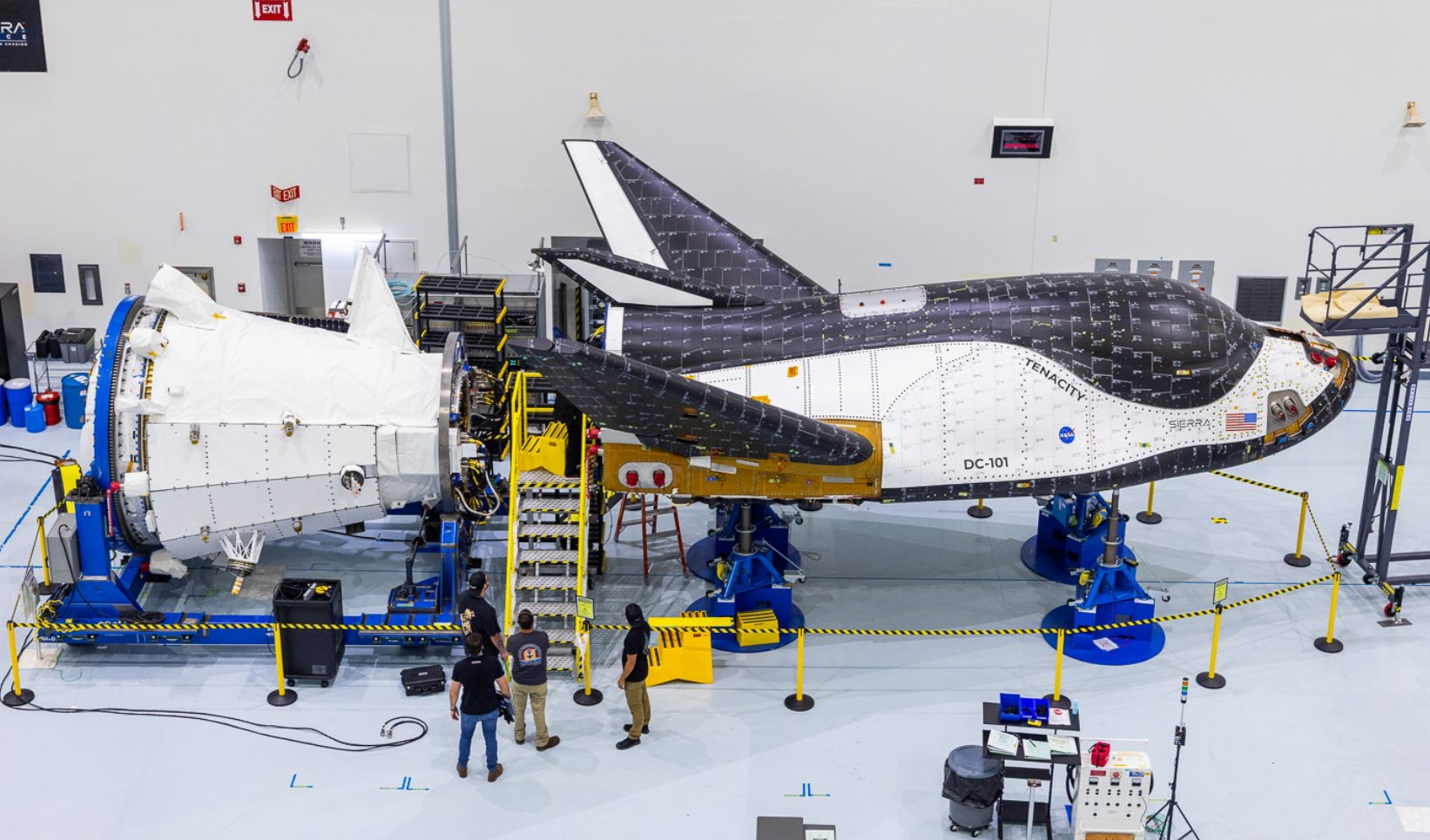
Back in 2016, NASA awarded Sierra Space a significant contract to resupply the International Space Station with its Dream Chaser spaceplane. Yesterday, the agency and company confirmed that this contract has been modified, moving from a minimum of seven flights to the station to just a single free-flying mission.
Not only that, but they also confirmed that the earliest we could see Dream Chaser Tenacity lift off will be late 2026, continuing the pattern of delays for the spaceplane. Here I will go more in-depth into the new contract modification, launch date, what this means for the program, and more.
Contract Modification
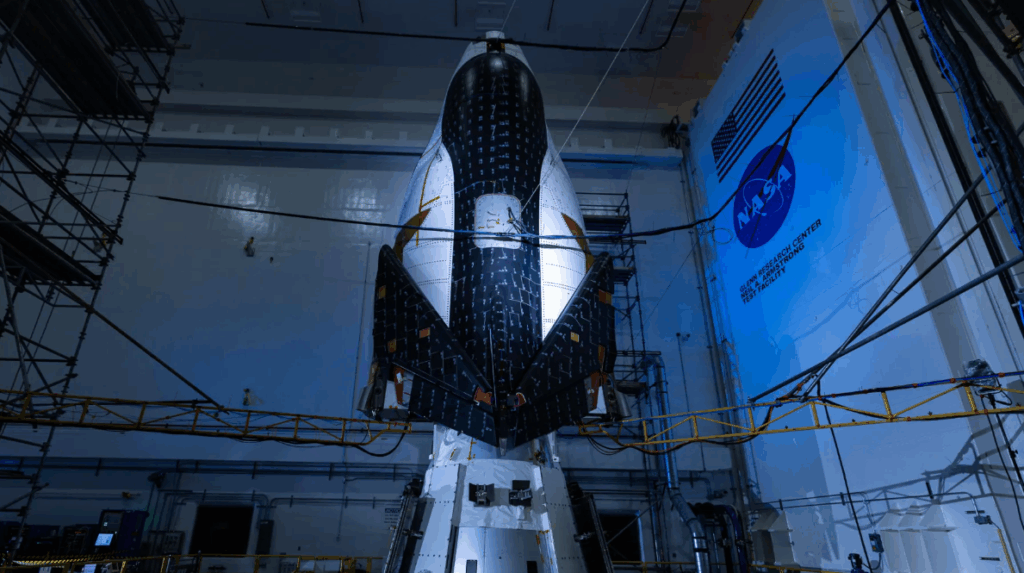
As part of the original contract, awarded nearly a decade ago, Dream Chaser had at least 7 flights planned, not to mention the agency previously issued firm-fixed price task orders for four Dream Chaser resupply missions based on the needs of the space station. While the value of all these missions wasn’t disclosed, it certainly was a substantial amount of money and core to the program.
These future missions, however, are now gone, replaced by a single free flight that will see Dream Chaser Tenacity not even dock to the station. In a statement from NASA, the agency said, “After a thorough evaluation, NASA and Sierra Space have mutually agreed to modify the contract as the company determined Dream Chaser development is best served by a free flight demonstration, targeted in late 2026. Sierra Space will continue providing insight to NASA into the development of Dream Chaser, including through the flight demonstration. NASA will provide minimal support through the remainder of the development and the flight demonstration. As part of the modification, NASA is no longer obligated for a specific number of resupply missions, however, the agency may order Dream Chaser resupply flights to the space station from Sierra Space following a successful free flight as part of its current contract” they said.
Within this statement, they don’t directly address the reason for modifying the contract, other than stating that it’s mutually agreed upon and is best served by a free flight demonstration. In reality, it likely has to do with continued delays and the eventual deorbit of the International Space Station planned around 2030.
In a statement from Sierra Space, they announced, “a strategic transition for its Dream Chaser® spaceplane. Dream Chaser’s first flight will be a free-flyer, demonstration mission, which is expected to prove the technology and deliver critical data to NASA. This approach aims to provide Sierra Space with flexibility to address the nation’s most pressing National Security Space challenges, while continuing to advance Dream Chaser’s capabilities for NASA and commercial customers.”
They go on to say, “Sierra Space and NASA worked together to reach this mutually beneficial agreement that provides greater mission flexibility for Dream Chaser’s first flight. This flight aims to demonstrate critical capabilities for NASA’s ISS resupply and future Commercial LEO Destinations (CLD) missions and position Dream Chaser as a national asset available for future national security and defense demonstrations” they said.
It’s clear that work over the past few years on this vehicle has not been nearly as smooth as the company had hoped. Dana Weigel, manager of NASA’s International Space Station Program mentioned, “Development of new space transportation systems is difficult and can take longer than what’s originally planned. The ability to perform a flight demonstration can be a key enabler in a spacecraft’s development and readiness, as well as offering greater flexibility for NASA and Sierra Space. As NASA and its partners look toward space station deorbit in 2030, this mutually agreed to decision enables testing and verification to continue on Dream Chaser, as well as demonstrating the capabilities of the spaceplane for future resupply missions in low Earth orbit.”
While both the agency and company try to highlight future opportunities, the reality is Dream Chaser is not in a good position. With the ISS mainly out of the picture, its future would rely on commercial space stations and similar mission profiles to deliver cargo. While there are plenty in the works, most are still a ways away and have other options to deliver cargo that are already operating and proven.
Orbital Reef is a possible option; however, the station is far from a priority for Blue Origin and won’t be operating for years. What’s arguably even more concerning related to Dream Chaser’s future is the fact that the vehicle has still not flown and isn’t expected to for a while.
Launch Delays
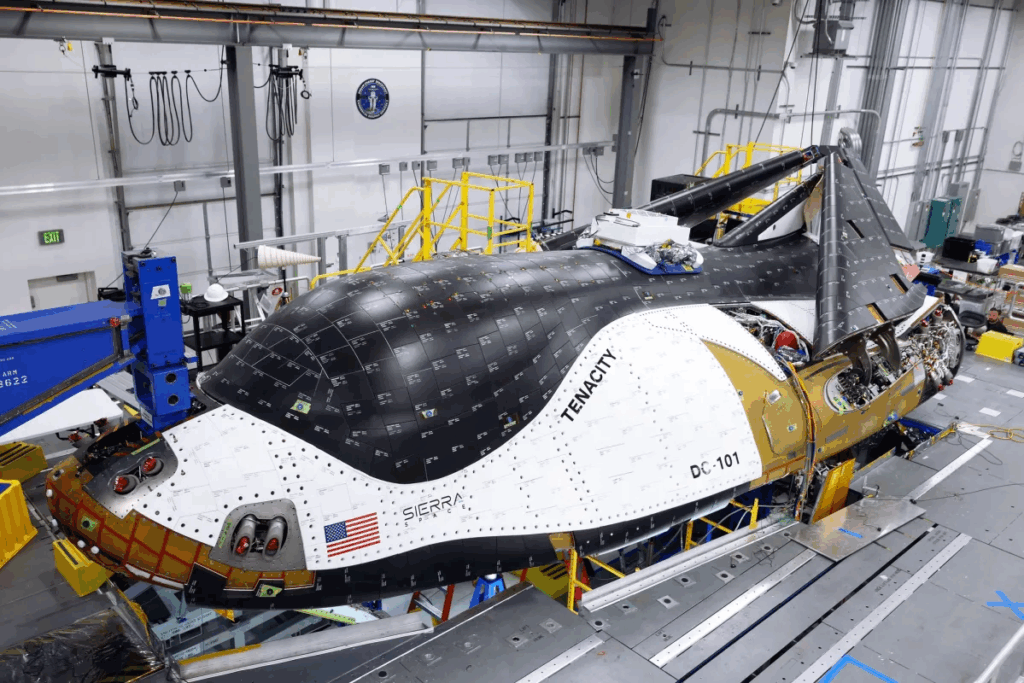
The official current launch timeline is late 2026. Based on the history of Dream Chaser delays and the fact that this new estimate from the company is around a year away, it’s very possible this slips into 2027. That would mean Tenacity is launching years after it was supposed to.
In terms of the current progress of Tenacity, it’s still in testing. During the SpaceX Crew-11 post-launch news conference held on August 1st, a question was asked to the panel regarding Dream Chaser and what its current status was. Dana Weigel was quoted saying, “They’re in final assembly, they’re doing a lot of tests, and they’re doing what I call final certification work. Some of the big key areas that they’re working on is the software certification. They have to test end-to-end all the different software functions, so that’s a big focus area for them. And then they’re still working on certification in the prop system.
She went on to say, “We still have some of our integrated safety reviews to do, and we’re in the process with updating both of our schedules to try to understand where does that really put us. And so Sierra’s working on that, and so I need to wait and just get information back from them to see where they think some of that work lines out” she said.
It’s clear, given these quotes and recent information, that there’s still a lot of work left both on Sierra Space’s side and even NASA’s side as they wait to begin certain safety reviews. What’s interesting is that in the past it seemed as if the company was genuinely close to launching. To put it in perspective, back in late 2023, the company was actively training astronauts flying on the Dragon spacecraft so that when Tenacity docked while they were aboard the station, they would be familiar with the procedures and spacecraft.
At the time, when talking about Crew-7 in a statement, the company said, “During their planned six-month stay, Dream Chaser will make its maiden voyage to deliver cargo to the ISS as part of NASA’s Commercial Resupply Services-2 (CRS-2) contract. Now here we are with a launch that likely won’t happen until 2027.
For reference, Dream Chaser has been under development for more than two decades now. One of the last significant updates provided came over a year ago in May 2024, when Dream Chaser Tenacity was delivered to one of NASA’s facilities in Florida for testing.
At the time, they were quoted saying, “The remaining pre-flight activities at Kennedy include acoustic and electromagnetic interference and compatibility testing, completion of work on the spaceplane’s thermal protection system, and final payload integration.”
What’s clear by now is that it’s very hard to get a good idea of exactly what’s happening with the spacecraft and the cause of years of continuous delays.
Focusing back on the contract modification, the agency commented, “NASA, and its commercial and international partners, will continue to supply the orbital complex with critical science, supplies, and hardware as the agency prepares to transition to commercial space stations in low Earth orbit. NASA continues to work with a variety of private companies to develop a competitive, space industrial base for cargo services, which will be needed for future commercial space stations. With a strong economy in low Earth orbit, NASA will be one of many customers of private industry as the agency explores the Moon under the Artemis campaign and Mars along with commercial and international partners” they said.
In the meantime, Sierra Space still has high hopes for the spaceplane. In their official statement, they mentioned, “As America’s Spaceplane, we believe its adaptability as an orbital, hypersonic spacecraft and rapid deployment, commercial testbed is critical to addressing the nation’s evolving priorities and emerging threats. Additionally, Dream Chaser has unique features and capabilities as a commercial, autonomous spaceplane with the ability to land on any conventional runway, enabling reusability, rapid turnaround, and cost-efficient operations for space missions.”
Finally, the executive chair at the company commented, “Dream Chaser represents the future of versatile space transportation and mission flexibility. This transition provides unique capabilities to meet the needs of diverse mission profiles, including emerging and existential threats and national security priorities that align with our acceleration into the Defense Tech market. Together with NASA, we are seeking to preserve the exceptional potential of Dream Chaser as a national asset, ensuring its readiness for the next era of space innovation.”
While they are still optimistic, this development is far from ideal. It’s important to point out that a lot of work over the last few years has been related to a future ISS docking. Besides training astronauts, Sierra Space has run all sorts of simulations for the vehicle’s approach, berthing, separation, etc. Between now and late next year, we can expect an update from the company regarding the vehicle’s progress and whether or not that launch date is realistic.
Conclusion
NASA and Sierra Space just modified their contract, meaning the agency is no longer obligated for a specific number of resupply missions. Instead, we can expect a single free flight of Dream Chaser Tenacity. That current mission is scheduled to happen in late 2026, assuming there are no more delays.