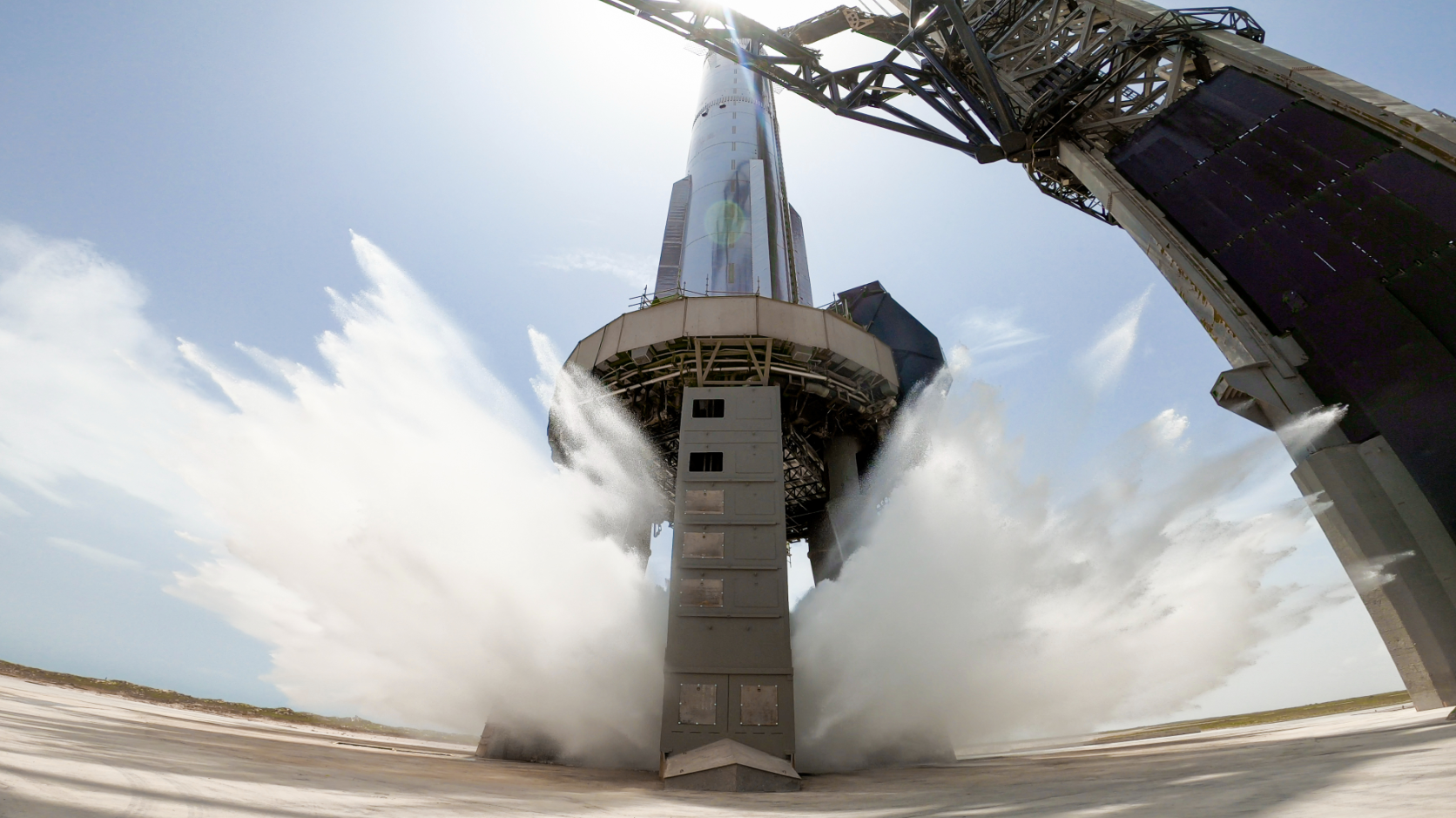
Despite an early end to flight 9 and the loss of Ship 36 on the test stand, SpaceX looks to be closing in on Flight 10 of Starship. Recently, Musk shared a time estimate of 3 weeks until the next launch. While timelines from the CEO should be taken with a grain of salt, the progress currently going on at Starbase also supports a launch not long from now.
Based on the results of the last few flights, SpaceX is definitely aiming for a win, or a fully successful test flight, allowing any mid-flight tests to be completed and ending with a soft upper-stage splashdown. Here I will go more in-depth into the launch timeline, what SpaceX has been up to, Flight 10, and more.
When Is Flight 10
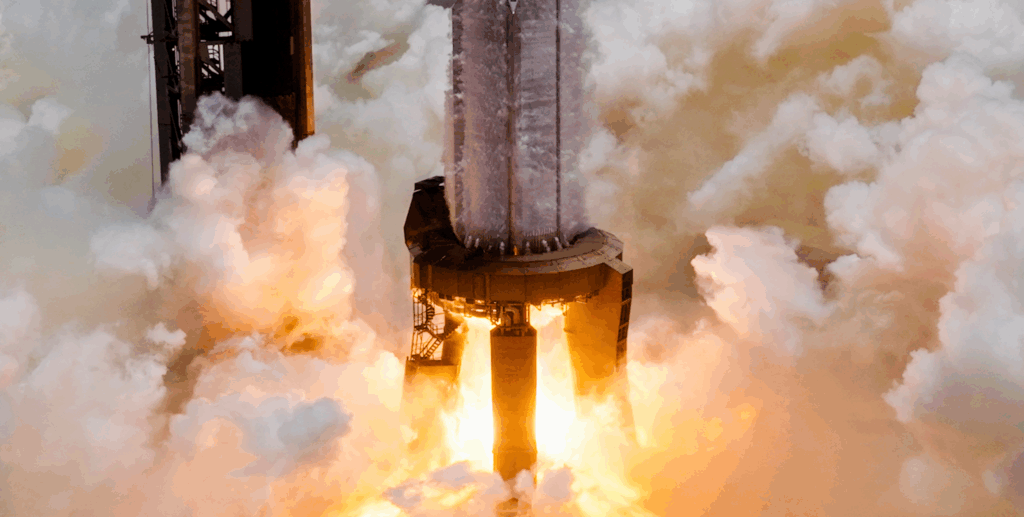
While there aren’t any official dates yet, we can get a good idea by looking at physical progress along with comments from the company. Most notably, just a few days ago in a reply to a Starship-related post, Musk said, “Launching again in ~3 weeks”. That would put the 10th launch right around early August.
While dates provided by Elon can often be ambitious, this timeline is actually plausible and at the very least, could be accurate, give or take a week or two.
Currently, the main items that need to be completed prior to a launch include altering the Orbital Launch Mount, and then using it to complete a static fire of Ship 37. For context, SpaceX was aiming to launch weeks ago in late June. However, during a static fire of Ship 36, the vehicle was lost, in addition to the test pad being damaged. With no operational test site, SpaceX is now working to get the OLM up and running so they can conduct a static fire and then move on to flight 10. The other option would be waiting for the test site to be repaired; however, that would cause even more delays.
It’s also clear that the company can’t afford to skip a static fire, at least of the ship. Had the Ship 36 anomaly not presented itself during the static fire, it would likely have become an issue on the actual launch. Combine this with the rocky history of Starship V2 upper stages, and SpaceX knows a static fire is necessary, even if it means making temporary alterations to the actual launch pad. On the bright side, the upper stage seems to be the main item left, and the determining factor.
The booster is just about ready and has been for quite some time. Over a month ago, on June 6, the company successfully completed a 33-engine static fire of B16. They were quoted saying, “Full duration static fire of all 33 Raptor engines on the Super Heavy booster ahead of Starship’s next flight test.” All things considered, once the ship is ready, the two stages will be stacked and a launch will occur.
What’s interesting is that SpaceX was actually on pace to begin increasing the Starship launch cadence by quite a bit. Right after Flight 9, Elon was quoted saying, “Launch cadence for next 3 flights will be faster, at approximately 1 every 3 to 4 weeks.” Within this one comment, there’s actually quite a lot to unpack. When he mentions specifically 3 flights, this was referring to the fact that the company had 3 Starship V2 upper stages left. This number is now two after the loss of Ship 36 on the test stand.
Regardless, it suggests that SpaceX is eager to speed up and get these final V2 upper stages out of the way so they can move on to Starship V3. With that newer variant, they are making a significant number of changes. Recently, at the Mars Presentation, Elon was quoted saying, “Starship V3 is the version that achieves all the key elements. Generally, with any new technology, it takes 3 major iterations to have it really work well. With Raptor 3 and Starship, and Booster, it should be able to achieve all of the things which I just mentioned, which is a rapidly reusable reliable rocket, with orbital refilling. Which we are aiming to launch for the first time at the end of this year,” he said.
Focusing back on the launch timeline, had Ship 36 not been lost on the test stand, it looks like SpaceX was just about on schedule for that 3-4 week estimate provided by Musk. There was a targeted launch date of June 29th, which would have been about 4 weeks after Flight 9, had they launched. In terms of what this means for the next flight, despite the company working to speed up, in all likelihood, Flight 10 won’t be until mid to late August, rather than early that month. This mainly has to do with the fact that the new static fire infrastructure on the launch pad will likely take a bit longer than expected. This also assumes the testing goes very well.
The last evidence related to Flight 10 was an FCC permit posted just days ago. Here, the listed operation start date is August 4, with the purpose of operation noted as Starship Test Flight 10. Granted, these types of permits are by no means actual set launch dates and in reality are valid for 6 months. They do, however, give an idea of what the company is aiming for.
Starship’s Future
Since Flight 9, we haven’t heard too much from the company regarding what happened. In an official statement they released after the launch, they’re quoted saying, “A subsequent attitude control error resulted in bypassing the Raptor relight and prevented Starship from getting into the intended position for reentry. Starship then went through an automated safing process to vent the remaining pressure to place the vehicle in the safest condition for reentry. Contact with Starship was lost approximately 46 minutes into the flight, with all debris expected to fall within the planned hazard area in the Indian Ocean.”
They finished by saying, “Starship’s ninth flight test marked a major milestone for reuse with the first flight-proven Super Heavy booster launching from Starbase, and once more returned Starship to space. Data review is underway, and new improvements will be implemented as work begins to prepare the next Starship and Super Heavy vehicles for flight. Developmental testing by definition is unpredictable, but every lesson learned marks progress toward Starship’s goal of enabling life to become multiplanetary” they said.
On the upcoming 10th flight test, it’s becoming more important that they complete the full flight profile. One of the big downsides of losing the ship early on recent flights is the lack of data that would have been gathered on different mission milestones. The heat shield is a great example, as it’s an area that SpaceX has and continues to work on, and is relying on a controlled Earth reentry to properly iterate.
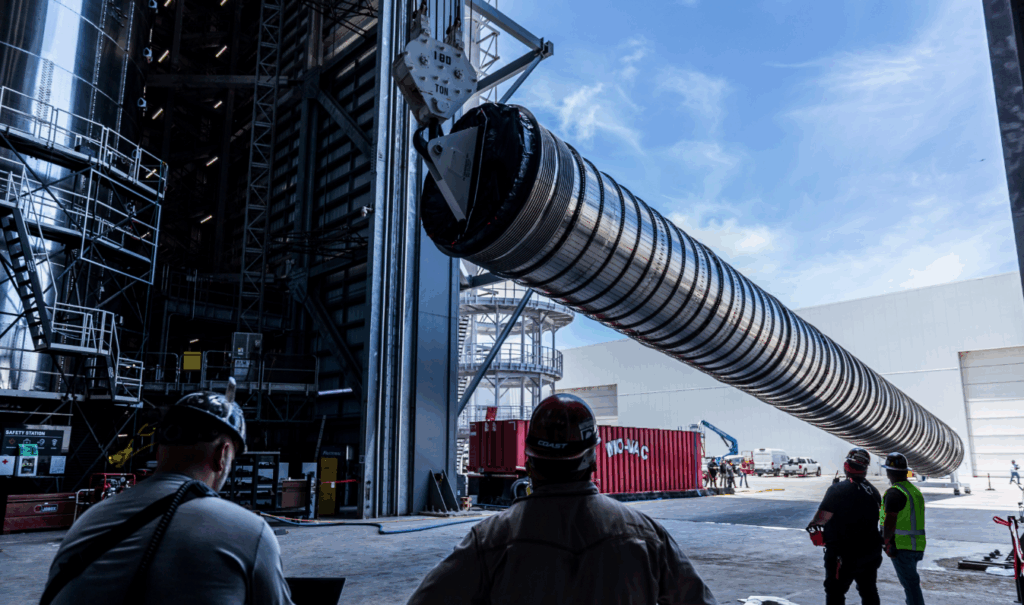
No matter what, the push to Starship V3 seems to be one of the main priorities. Recently, SpaceX installed the redesigned fuel transfer tube into the first next-generation Super Heavy booster. They pointed out that it’s “Roughly the same size as the first stage of a Falcon 9 rocket,” and that “the new transfer tube is responsible for channeling cryogenic fuel from Super Heavy’s main tank to its 33 Raptor engines and will enable faster, more reliable flip maneuvers and the ability for simultaneous engine startup”.
This comes in addition to a long list of changes coming to future variants. Another is the Raptor 3 engine. When talking about this upgrade, Musk was quoted saying, “Raptor 3 is designed to require no base heat shield, saving a lot of mass on the bottom, and actually improving reliability. So if there is, for example, a small fuel leak from the Raptor engine, it will simply leak into the existing flaming plasma, and not really matter, whereas a fuel leak when the engines are contained in a box is a very scary thing. Raptor 3 might take a few kicks at the can, but it’s a massive increase in payload capability, in engine efficiency, and in reliability. So this is really a revolutionary engine” he said.
On the booster, future generations will no longer have a heat shield around the engines. This is because the Raptor 3 engines will be able to withstand the heat thanks to electronics and various plumbing being moved within the actual structure of the engine. The big upside of this is a significant reduction in weight. There’s also the removal of one grid fin, a permanently attached hot stage ring, and more.
It’ll be interesting to see how Starship V3 performs, given all the changes and the rocky history of Starship V2. The company seems confident that this next generation is greatly improved, and with it, a much more consistent launch outcome of the vehicle. In the future, we can also expect some even more ambitious flight profiles, including catching the ship back at the launch site. However, SpaceX will need to fix any remaining upper stage issues before putting one in orbit and returning it to the pad.
Conclusion
Based on comments from SpaceX, physical progress at the launch site, and various permits, it looks like Starship Flight 10 could launch around mid to late August. This assumes testing goes well and the changes to the Orbital Launch Mount are done in a timely manner.